Coriolis
An LED wall display, ten years in the making. A clock first, then ambient art, workouts and games.
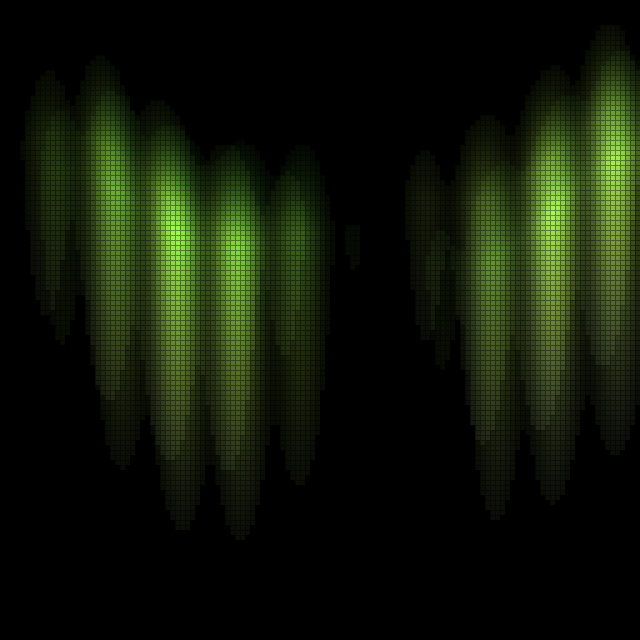
Try the wall display in your browser
IR Remote & Controls
Click the LED panel or use the remote buttons. Arrows navigate, play Snake/Pong/Tetris/Labyrinth, or switch palettes on ambient scenes.
Aurora, then Borealis, then Coriolis. This is the third generation of my LED wall: a 128×128 display built from four 64×64 HUB75 panels and a Teensy 4.1. It’s a wall clock first, with ambient art, a guided-fitness suite and games on top. The software is ahead of the hardware: it runs today in a desktop simulator, and the physical build comes next.
Coriolis: 128×128
The simulator is the main development environment. The scene switching, launcher, settings and overlays are shared line for line between the simulator and the firmware, and scenes draw into an abstract frame buffer instead of touching hardware, so what runs on the desktop is what will run on the wall. All the images here were captured from the simulator.
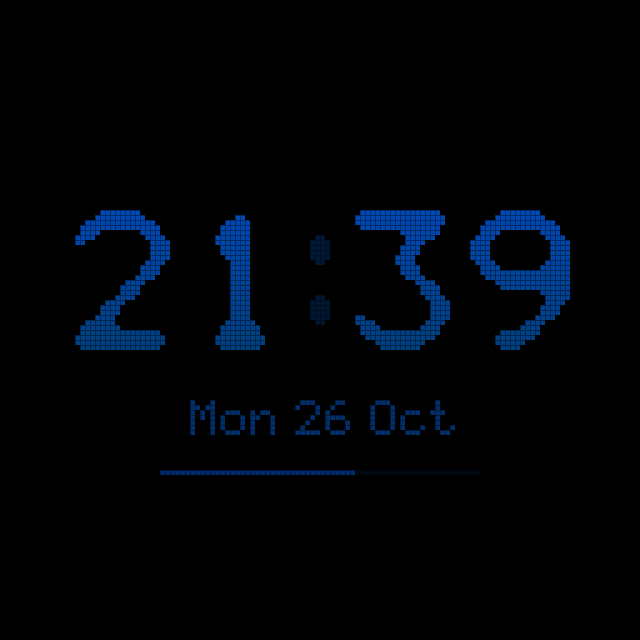
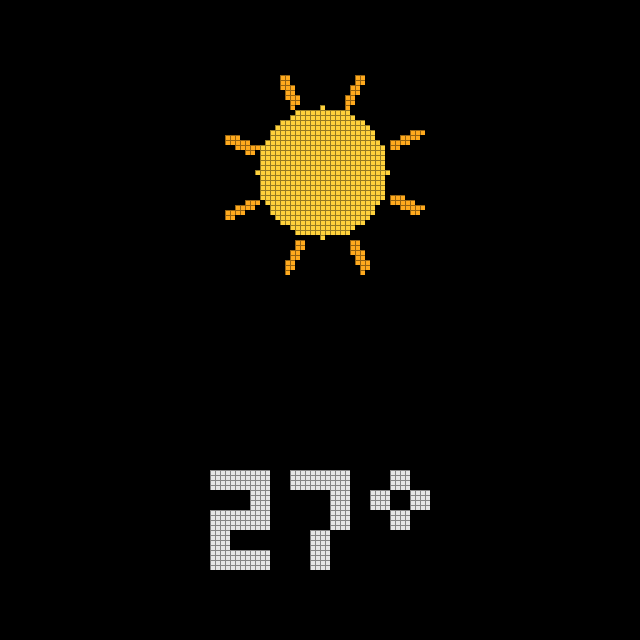

- Clocks: digital, analog and a word clock, plus weather and a calendar.
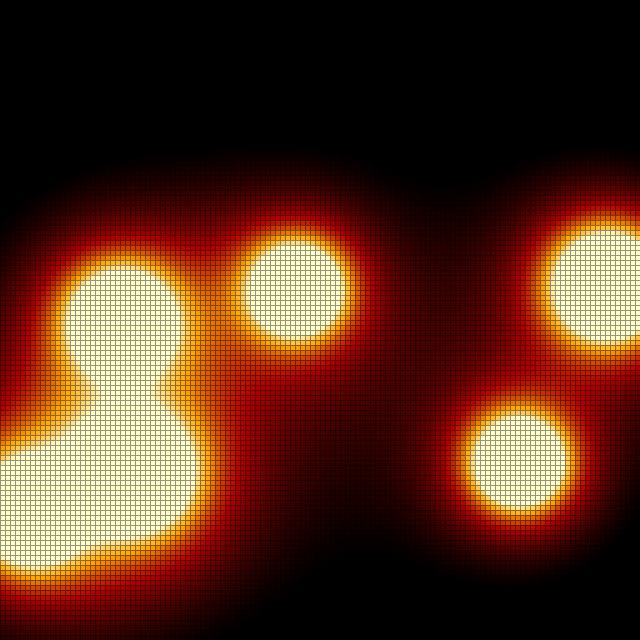
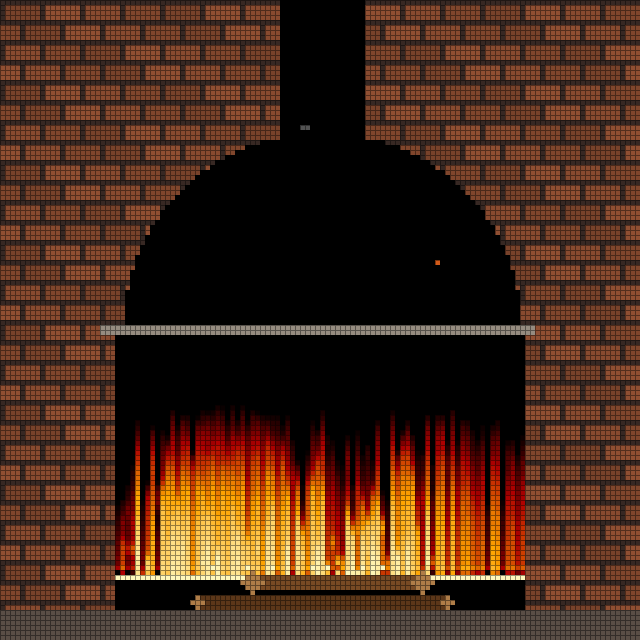
- Ambient art: aurora, lava, fireplace, rain, starfield, mandala, an aquarium and the Game of Life.
- Fitness: guided exercise, tabata, breathing and focus timers.
- Games: snake, pong, a labyrinth and more.
The project comes with a user’s manual and a build guide, both in the repository.
Where it started: Borealis, 64×64
Borealis was a fork of the Aurora project by Pixelmatix, a visualizer for LED matrix displays. I built it from two 64×32 HUB75 panels screwed onto a custom aluminum frame, making a single 64×64 display four times the size of the original, driven by a Teensy 3.2.
I first built it in the spring of 2016, before I knew how to code at all. All I really did was change some values and comment out unused features to save memory: at 64×64 it ran dangerously close to the Teensy’s 64 KB of RAM. Years later I came back to it with real programming skills to clean up the code I’d left behind, and that eventually grew into Coriolis.